
The Mandala
A mandala is a pattern, arranged as an aid to meditation,
and sometimes as the world in a diagrammatic form. Thus Borobudur
comprehends several, and three-dimensional at that: the
mudras or gestures in which
the Buddha sits on the north, south, east and west sides of
the monument; the stupa not only as a funeray monument for relifs, but also as
a simulacrum of Mount Sumeru, the cosmic mountain;
and the very structure of the galleries' and terraces' meaning.
The Mudras of the Buddha Statues
North: Abhaya-mudra: benevolence, dispelling of fear

West: dhyana-mudra: meditation
East: Bhumisparsa-mudra: touching the earth


South: vara-mudra: granting a wish

The Structure of the Stupa
The stupa consists of a basement, four galleries, and upper terraces,
representing a pilgrim's journey from the chains of flesh toward Nirvana:
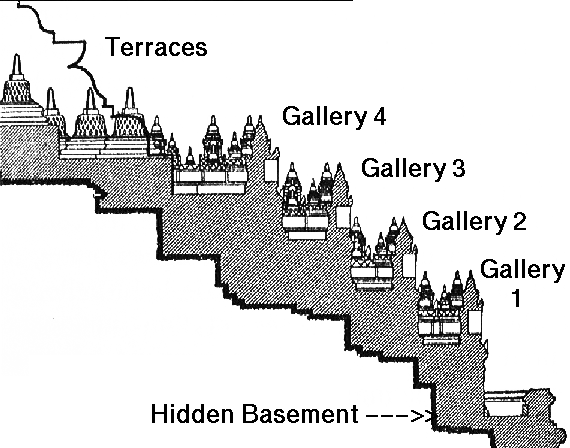
- Basement: Kamadhatu, or desire
- Rupadhatu, the sphere of forms, and yearning for Enlightenment:
Gallery 1: Life of Buddha
Gallery 2:Gandawyuha
Gallery 3: Maitreya
Gallery 4: Samantabhadra and Maitreya
- Terraces: Aruphadatu: formlessness and Enlightenment attained